
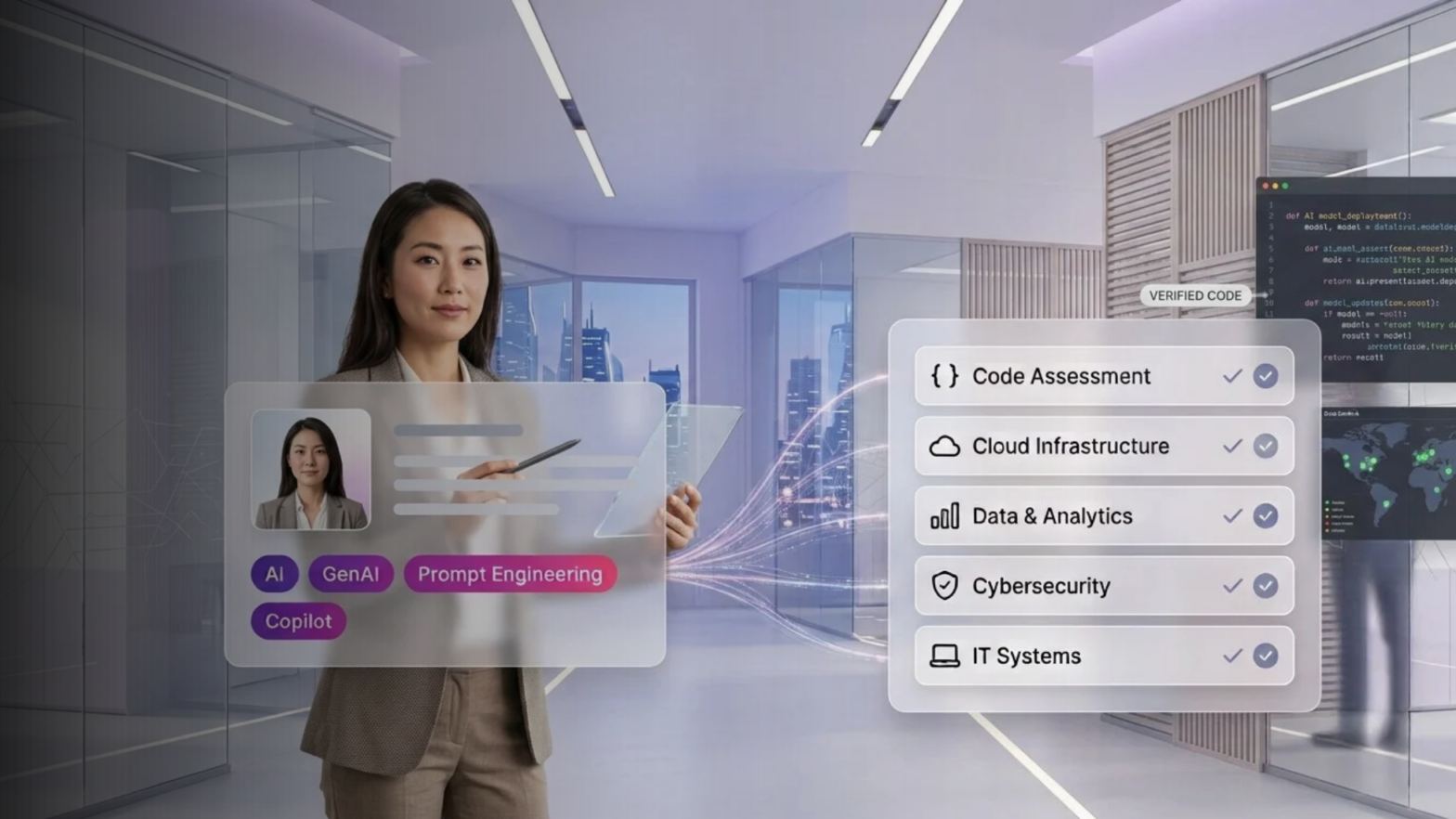
AI skills now appear in a growing number of US IT job descriptions. But a resume listing “AI,” “prompt engineering,” or “GenAI tools” does not show whether a candidate can apply those skills in real development, data, cloud, or IT operations work.
The challenge is verifying capability before the interview.
That matters because employers continue to hire traditional technical roles at substantial volume, and demand for AI-adjacent skills is climbing even faster. CompTIA reported AI-skill job listings up 153% year-over-year in June, with software developers, systems engineers/architects, tech support specialists, cybersecurity professionals, and network engineers topping overall hiring volume.
Why Generalist Screening Fails for AI-Enabled IT Roles
Most sourcing pipelines still filter on keyword density. That breaks when “AI” becomes a buzzword across IT functions.
- Developers cite Copilot fluency without showing how they validate AI-generated code.
- Cloud and DevOps engineers list AI-assisted tools without showing when automation should be overridden.
- Data architects reference AI-driven pipelines while overlooking governance and dependencies.
- Cybersecurity specialists claim AI threat-detection exposure without evidence of real incident response.
- IT support staff add “AI troubleshooting” with little evidence beyond chatbot usage.
Keyword matching cannot distinguish applied competence from passive exposure. It pushes verification into interview cycles that were never designed to be technical audits.
What AI Skill Verification Actually Requires
Validating AI-adjacent IT skills means testing capability against role reality:
- Technical validation through role-specific scenarios.
- Role-relevance screening against the required stack and workflows.
- Communication and problem-solving assessment under ambiguity.
- Structured shortlisting so interviews focus on fit.
Building Verification into the US IT RPO Process
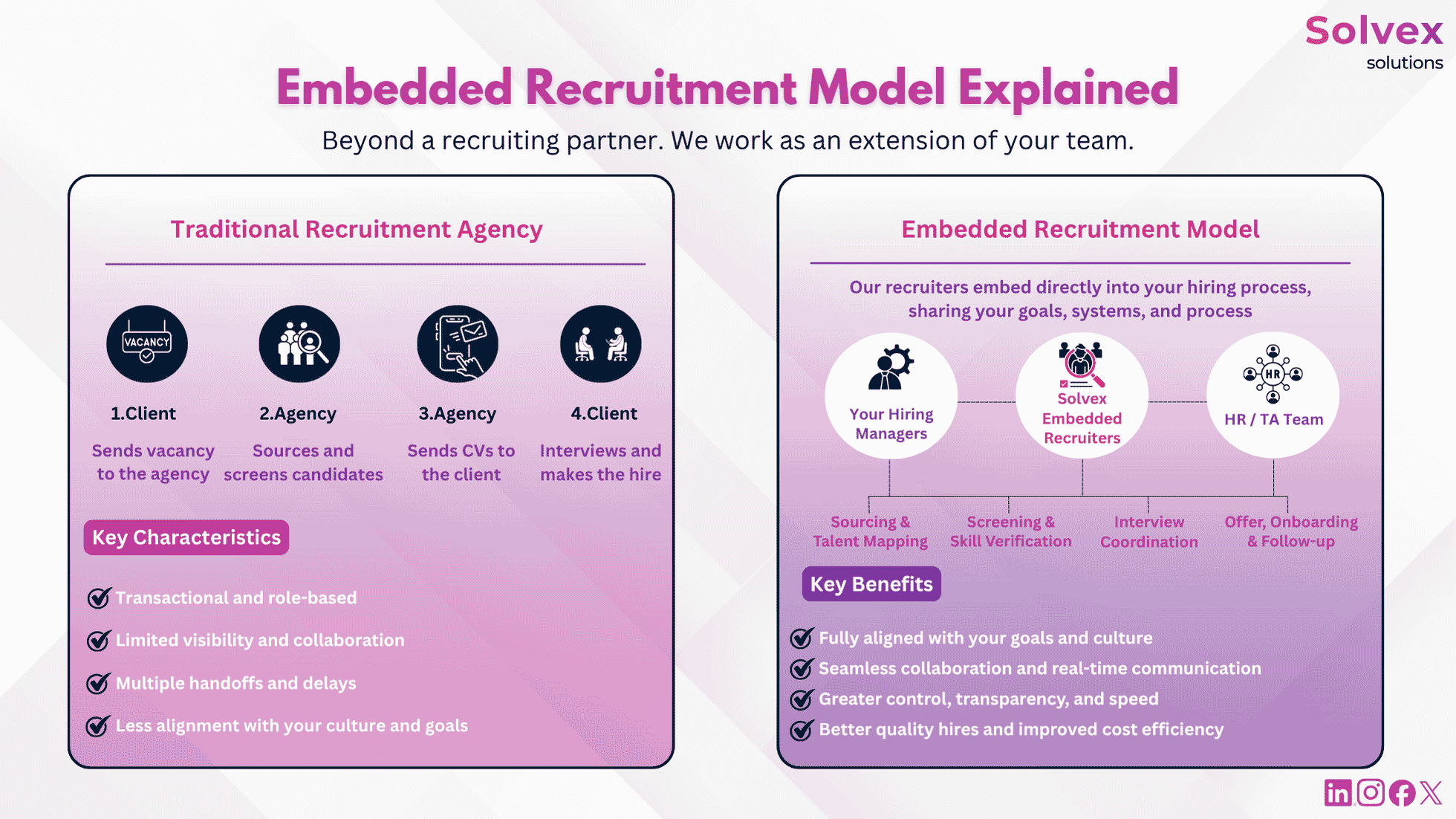
An embedded recruitment model puts dedicated technical recruiters inside the client’s hiring cycle, working from the engineering team’s actual stack, sprint priorities, and role definitions, rather than a generic requisition. That proximity is what turns skill verification from a one-off check into a repeatable part of the hiring process.
From Skill Verification to Better IT Hiring
When recruitment teams validate capability before the interview, hiring managers spend less time separating AI claims from genuine expertise, and more time deciding on real fit.
A specialized US IT RPO process helps employers move beyond keyword matching by validating technical skills, role relevance, communication, and real-world problem-solving before candidates are presented.